Thursday, 25 July 2013

Mass Readings and reflection on feast of Grandparents of Jesus - Joachim & Anne

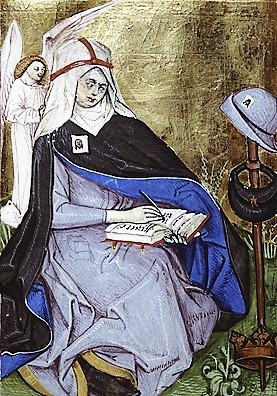
Saint Joachim and Saint Anne, grandparents of Jesus – Memorial   26 July 2013
 

First reading from the Book of Wisdom of Jesus Ben Sirach (Ecclesiasticus 44:1.10-15). 

Now will I praise those godly men, our ancestors, each in his own time.
Yet these also were godly men whose virtues have not been forgotten;
Their wealth remains in their families, their heritage with their descendants;
Through God's covenant with them their family endures, their posterity, for their sake.
And for all time their progeny will endure, their glory will never be blotted out;
Their bodies are peacefully laid away, but their name lives on and on.
At gatherings their wisdom is retold, and the assembly proclaims their praise.
 
Psalm 132
 
The LORD swore to David
A firm promise from which he will not withdraw:
"Your own offspring
I will set upon your throne."
 
For the LORD has chosen Zion;
He prefers her for his dwelling.
"Zion is my resting place forever;
In her will I dwell, for I prefer her."
 
"In her will I make a horn to sprout forth for David;
I will place a lamp for my anointed.
His enemies I will clothe with shame,
But upon him my crown shall shine."
 
 
Gospel of St. Matthew 13:16-17. 

Jesus said to his disciples: "Blessed are your eyes, because they see, and your ears, because they hear.
Amen, I say to you, many prophets and righteous people longed to see what you see but did not see it, and to hear what you hear but did not hear it".

 
 Commentary of the day :

A very short Gospel today could command a very long commentary but due to pressure in other areas I will be brief. I think I have commented before on this feast of the grandparents of our Lord (we get their name and their story from an ancient Apocryphal document called ‘The Protoevangelium of St James’).

In many parishes this day is celebrated as "Grandparents' Day" because Joachim & Anne are the patron saints of grandparents. I certainly remember celebrating many Masses over the years and explaining to the incredulous grandparents the reason why we were honouring them on this particular day.

Jesus’ words today remind us that we were not witnesses to His life and actions so our faith is more valuable than those who had the privilege of doing so. They were blessed to have had the encounter they had with Him but we should learn from their testimony and trust their witness by the giving of their lives. Many wise people longed to see Jesus and did not have that privilege.

 Blessed Guerric of Igny (c.1080-1157), Cistercian abbot
 2nd sermon for the Annunciation ; SC 202 (trans. copyright Cistercian Fathers series)

Mary is the good, fruitbearing soil

Today “the Word was made flesh and began to dwell among us”... So today Wisdom began to build himself the house of our body in the Virgin's womb... Without the intervention of man he fashioned for himself from a virginal body the flesh of our redemption. From this day “the Lord of hosts is with us, the God of Jacob is our champion,” because today we are exalted in the Lord so that “glory may dwell in our land”.

Indeed today, Lord, you did “bless that earth” of yours, “blessed among women”. Today you did bestow the kindness of the Holy Spirit, so that “our earth might yield the blessed fruit of her womb” and, as the heavens dropped down dew from above a virginal womb, might bring forth a Saviour. Accursed is the earth on account of the Accursed one, bringing forth as it does, even when cultivated, thorns and thistles to the heirs of the curse. But now, blessed is the earth in the work of the Redeemer, for it brings to birth the remission of sins and the fruit of life to all and frees the sons of Adam from the doom with which their origin was cursed.

Indeed that earth is blessed which, wholly untouched, not dug nor sown, from heaven's dew alone brings forth a Saviour and provides mortal men with the Bread of angels and the Food of eternal life. So this earth which was not cultivated, seemed to be derelict but it was full of rich fruit; it seemed to be a lonely waste but it was a paradise of happiness. Truly the waste was a garden of God's delight.

( Biblical references : Jn 1,14; 1Co 1,24; Pr 9,1; Ps 46[45],8; Ps 85[84],10.2; Lk 1,28; Ps 85[84],13 & Lk 1,42; Is 45,8; Gn 3,17-18; Jn 8,44; Ps 78[77],25)

Wednesday, 24 July 2013

Can you drink the cup that I must drink?


 Readings and reflection on the Feast of Saint James, apostle -  Thursday, 25 July 2013
First Reading 2 Cor. 4:7-15. 

Brothers and sisters: We hold this treasure in earthen vessels, that the surpassing power may be of God and not from us. We are afflicted in every way, but not constrained; perplexed, but not driven to despair; persecuted, but not abandoned; struck down, but not destroyed; always carrying about in the body the dying of Jesus, so that the life of Jesus may also be manifested in our body.
For we who live are constantly being given up to death for the sake of Jesus, so that the life of Jesus may be manifested in our mortal flesh.
So death is at work in us, but life in you.
Since, then, we have the same spirit of faith, according to what is written, "I believed, therefore I spoke," we too believe and therefore speak,
knowing that the one who raised the Lord Jesus will raise us also with Jesus and place us with you in his presence.
Everything indeed is for you, so that the grace bestowed in abundance on more and more people may cause the thanksgiving to overflow for the glory of God.


Psalm  126 

We were like men dreaming.
Then our mouth was filled with laughter,
And our tongue with rejoicing.
 
Then they said among the nations,
"The LORD has done great things for them."
The LORD has done great things for us;
We are glad indeed.
 
Restore our fortunes, O LORD,
Like the torrents in the southern desert.
Those that sow in tears
Shall reap rejoicing.
 
Although they go forth weeping,
Carrying the seed to be sown,
They shall come back rejoicing,
Carrying their sheaves.
 
Gospel of St. Matt 20:20-28. 

The mother of the sons of Zebedee approached Jesus with her sons and did him homage, wishing to ask him for something.

He said to her, "What do you wish?" She answered him, "Command that these two sons of mine sit, one at your right and the other at your left, in your kingdom."

Jesus said in reply, "You do not know what you are asking. Can you drink the cup that I am going to drink?" They said to him, "We can."

He replied, "My cup you will indeed drink, but to sit at my right and at my left (, this) is not mine to give but is for those for whom it has been prepared by my Father."

When the ten heard this, they became indignant at the two brothers.

But Jesus summoned them and said, "You know that the rulers of the Gentiles lord it over them, and the great ones make their authority over them felt.

But it shall not be so among you. Rather, whoever wishes to be great among you shall be your servant; whoever wishes to be first among you shall be your slave.

Just so, the Son of Man did not come to be served but to serve and to give his life as a ransom for many."

 
 Commentary of the day :

I have been to the grave of St James in Spain (called 'Santiago' in Spanish) well, at least they claim its his body but I really have my doubts. We were 'fortunate' to be there on the one day of the year they allow you to get close to his body during a holy week where the pilgrims return from their big walk of 700kms to the Church of Santiago de Campostella. The day had lots of highlights but the biggest one is the swinging of a gigantic thurible. (Click on link if you are interested in seeing it).
 
 
But all that digresses from my main message of today being that James and his brother John were closest friends of Jesus and still they initially sought power and glory instead of sincerely wishing to follow Jesus (as today's story that St Matthew attributes to their mother while the other authors of synoptic Gospels suggest that it was James and John themselves that sought the honour of sitting on either side of Jesus in His glory).
James and John, instead of being offered glory are offered trials and a traumatic death which they freely accepted. Can you accept the Cross in your life when you choose to follow Jesus? Or are you like most Christians who just want the glory, the associations and the promise of divine providence?

 Saint Augustine (354-430), Bishop of Hippo (North Africa) and Doctor of the Church

 Sermon for the ordination of a bishop, Guelferbytanus no.32 ; PLS 2, 637


"Can you drink the cup that I am going to drink?"

 “Christ laid down his life for us; so we ought to lay down our lives for our brothers” (1Jn 3,16)... Jesus said to Peter: “When you were younger, you used to dress yourself and go where you wanted; but when you grow old,... someone else will dress you and lead you where you do not want to go...” (John 21:18). It was the Cross, the Passion, he promised him. “Go even so far as to pasture my sheep, suffer for my sheep.” This is what a good bishop is to be like. If he is not, he is no bishop...Now listen to this other testimony. Two of his disciples, the brothers John and James who were sons of Zebedee, were ambitious for the first place without consideration for the others... Our Lord answered them: “You do not know what you are asking”, for he added: “Can you drink the cup that I am going to drink?” What cup is this if not that... of the Passion?... And they, forgetting their weakness, immediately said: “We can”. Then he said to them: “My cup you will indeed drink. But to sit at my right or at my left is not mine to give but is for those for whom it has been prepared by my Father”... In this way he gave proof of his humility for, in fact, everything the Father prepares is prepared, too, for the Son... He came in humility: he, the Creator, was created amongst us; he made us, but he was made for us. God before time began, man in time, he delivered man from time. This great physician has come to heal our cancer...; by his example he has come to heal pride itself. This is what we must give our attention to in the Lord: let us consider his humility, drink the cup of his humility, clasp him, contemplate him. How easy it is to have elevated thoughts, easy to take pleasure in honours, easy to give one's ear to flatterers and people who praise us. But to bear with insult, patiently undergo humiliation, pray for those who persecute us (Mt 5,39.44): that is the Lord's cup, that is the Lord's feast.

Tuesday, 23 July 2013

Let those who have ears, listen

 Wednesday of the Sixteenth week in Ordinary Time   24 July 2013

Feasts of St. Charbel Makhluf, Priest (1828-1898), Saint Christina, Virgin and Martyr († c. 300)

Exodus 16:1-5.9-15. 

The children of Israel set out from Elim, and came into the desert of Sin, which is between Elim and Sinai, on the fifteenth day of the second month after their departure from the land of Egypt. Here in the desert the whole Israelite community grumbled against Moses and Aaron. The Israelites said to them, "Would that we had died at the LORD'S hand in the land of Egypt, as we sat by our fleshpots and ate our fill of bread! But you had to lead us into this desert to make the whole community die of famine!"
Then the LORD said to Moses, "I will now rain down bread from heaven for you. Each day the people are to go out and gather their daily portion; thus will I test them, to see whether they follow my instructions or not.
On the sixth day, however, when they prepare what they bring in, let it be twice as much as they gather on the other days."
Then Moses said to Aaron, "Tell the whole Israelite community: Present yourselves before the LORD, for he has heard your grumbling."
When Aaron announced this to the whole Israelite community, they turned toward the desert, and lo, the glory of the LORD appeared in the cloud!
The LORD spoke to Moses and said,
"I have heard the grumbling of the Israelites. Tell them: In the evening twilight you shall eat flesh, and in the morning you shall have your fill of bread, so that you may know that I, the LORD, am your God."
In the evening quail came up and covered the camp. In the morning a dew lay all about the camp, and when the dew evaporated, there on the surface of the desert were fine flakes like hoarfrost on the ground. On seeing it, the Israelites asked one another, "What is this?" for they did not know what it was. But Moses told them, "This is the bread which the LORD has given you to eat.
 
Ps 78(77):18-19.23-24.25-26.27-28. 

They tempted God in their hearts
by demanding the food they craved.
Yes, they spoke against God, saying,
“Can God spread a table in the desert?”
 
Yet he commanded the skies above
and the doors of heaven he opened;
He rained manna upon them for food
and gave them heavenly bread. 
 
Man ate the bread of angels,
food he sent them in abundance.
He stirred up the east wind in the heavens,
and by his power brought on the south wind.
 
And he rained meat upon them like dust,
and, like the sand of the sea, winged fowl,
Which fell in the midst of their camp
round about their tents. 

Mt 13:1-9. 

On that day, Jesus went out of the house and sat down by the sea.
Such large crowds gathered around him that he got into a boat and sat down, and the whole crowd stood along the shore.
And he spoke to them at length in parables, saying: "A sower went out to sow.
And as he sowed, some seed fell on the path, and birds came and ate it up. Some fell on rocky ground, where it had little soil. It sprang up at once because the soil was not deep, and when the sun rose it was scorched, and it withered for lack of roots. Some seed fell among thorns, and the thorns grew up and choked it. But some seed fell on rich soil, and produced fruit, a hundred or sixty or thirtyfold. Whoever has ears ought to hear."


 Commentary of the day :

 Isaac the Syrian (7th century), monk near Mosul, saint of the Orthodox churches
 Ascetical Discourses, 1st series, no.32

 
"A hundredfold"

Just as all the force of the laws and commandments God gave to men comes to fulfillment in purity of heart (as the Fathers say), so all the means and methods with which God is prayed come to fulfillment in pure prayer. Groanings, prostrations, petitions, lamentations: all the forms that prayer can take have their end, in fact, in pure prayer... Meditation no longer has anything to detain it: neither prayers, nor movements, nor lamentation, nor power, nor liberty, nor petition, nor desire, nor pleasure in what it hopes for in this life or in that which is to come. After pure prayer there is no other... Beyond this limit lies wonder and no longer prayer; prayer ceases and contemplation begins...Prayer is the sowing and contemplation the harvest of the grain. The reaper is astonished to see what cannot be expressed: how is it that from the tiny, bare seeds he has sown such abundant sheaves can have suddenly sprung up before his eyes? The sight of his harvest takes his breath away...Just as hardly a man in several thousands can be found to fulfil a little less badly the commandments and things of the Law and come to purity of soul, so one in a thousand can be found who is worthy, with much vigilance, of attaining pure prayer, of crossing the threshold and discovering this mystery. For it is not granted to many but to few to know pure prayer.


Monday, 22 July 2013

I prayed the prayers of St Bridget daily for many years

Mass Readings & reflection for Tuesday of the Sixteenth week in Ordinary Time   23 July 2013
Feast of St. Bridget of Sweden (1304-1373)

Learn a little of the story of this saint:
File:St Brigitta 1476.jpegSt. Bridget, the most celebrated saint of Sweden was the daughter of the knight, Birger Persson[1] of the family of Finsta, governor and lawspeaker of Uppland, and one of the richest landowners of the country, and his wife, a member of the so-called Lawspeaker branch of the Folkunga family. Through her mother, Ingeborg, Birgitta was related to the Swedish kings of her era.

In 1316, at the age of 13[1] she married Ulf Gudmarsson of the family of Ulvåsa, Lord of Närke, to whom she bore eight children, four daughters and four sons. All of them survived infancy except for two, which was very rare at that time. One of them was afterwards honored as St. Catherine of Sweden.
Bridget became known for her works of charity, particularly toward Östergötland's unwed mothers and their children. When she was in her early thirties, she was summoned to be lady-in-waiting to the new Queen of Sweden, Blanche of Namur. In 1341 she and her husband went on pilgrimage to Santiago de Compostela.

In 1344, shortly after their return, Ulf died at the Cistercian Alvastra Abbey in Östergötland. After this loss, Birgitta became a member of the Third Order of St. Francis and devoted herself wholly to a life of prayer and caring for the poor and the sick.

It was about this time that she developed the idea of establishing the religious community which was to become the Order of the Most Holy Saviour, or the Brigittines, whose principal house at Vadstena was later richly endowed by King Magnus IV of Sweden and his queen. One distinctive feature of the pre-Reformation houses of the Order was that they were double monasteries, with both men and women forming a joint community, though with separate cloisters.

In 1350, a year of jubilee, Bridget braved a plague-stricken Europe to make a pilgrimage to Rome accompanied by her daughter, Catherine, and a small party of priests and disciples. This was done partly to obtain from the Pope the authorization of the new Order and partly in pursuance of her self-imposed mission to elevate the moral tone of the age. This was during the period of the Avignon Papacy within the Roman Catholic Church, however, and she had to wait for the return of the papacy to Rome from the French city of Avignon, a move for which she agitated for many years.

It was not until 1370 that Pope Urban V, during his brief attempt to re-establish the papacy in Rome, confirmed the Rule of the Order, but meanwhile Birgitta had made herself universally beloved in Rome by her kindness and good works. Save for occasional pilgrimages, including one to Jerusalem in 1373, she remained in Rome until her death on 23 July 1373. Although she never returned to Sweden, her years in Rome were far from happy, being hounded by debts and by opposition to her work against Church abuses.She was originally buried at San Lorenzo in Panisperna before her remains were returned to Sweden. She was canonized in the year 1391 by Pope Boniface IX, which was confirmed by the Council of Constance in 1415. Because of new discussions about her works, the Council of Basel confirmed the orthodoxy of the revelations in 1436.

Visions


The Vision of St Bridget. The Risen Christ, displaying his wound from Longinus, inspires the writing of St Bridget. Detail of initial letter miniature, dated 1530, probably made at Syon Monastery, England, a Bridgettine House. (BL Harley MS 4640,f.15)

As a child, she had already believed herself to have visions; these now became more frequent, and her records of these "Revelationes coelestes" ("Celestial revelations") which were translated into Latin by Matthias, canon of Linköping, and by her confessor, Peter, prior of Alvastra, obtained a great vogue during the Middle Ages.[1] These revelations made Bridget something of a celebrity to some and a controversial figure to others.[2]

Her visions of the Nativity of Jesus had a great influence on depictions of the Nativity of Jesus in art. Shortly before her death, she described a vision which included the infant Jesus as lying on the ground, and emitting light himself, and describes the Virgin as blond-haired; many depictions followed this and reduced other light sources in the scene to emphasize this effect, and the Nativity remained very commonly treated with chiaroscuro through to the Baroque. Other details often seen such as a single candle "attached to the wall," and the presence of God the Father above, also come from Bridget's vision.

The Virgin kneels to pray to her child, to be joined by St. Joseph, and this (technically known as the Adoration of the Child) becomes one of the commonest depictions in the fifteenth century, largely replacing the reclining Virgin in the West. Versions of this depiction occur as early as 1300, well before Bridget's vision, and have a Franciscan origin, by which she may have been influenced, as she was a member of the Franciscan Order.[3] Her visions of Purgatory were also well known.[4]

Benedict XVI spoke of Bridget in a general audience on October 27, 2010, saying that the value of St. Bridget's Revelations, sometimes the object of doubt, was specified by the Venerable John Paul II in the letter Spes Aedificandi: "Yet there is no doubt that the Church," wrote my beloved predecessor, "which recognized Bridget's holiness without ever pronouncing on her individual revelations, has accepted the overall authenticity of her interior experience."[5]

The Fifteen 'Our Father and Hail Mary prayers'

Saint Bridget prayed for a long time to know how many blows Jesus Christ suffered during His terrible Passion. Rewarding her patience, one day He appeared to her and said, "I received 5480 blows upon My Body. If you wish to honor them in some way, recite fifteen Our Fathers and fifteen Hail Marys with the following Prayers, which I Myself shall teach you, for an entire year. When the year is finished, you will have honored each of My Wounds."[citation needed]

The prayers became known as the Fifteen O's, because in the original Latin, each prayer began with the words O Jesu, O Rex, or O Domine Jesu Christe.[6] Some have questioned whether Saint Bridget is in fact their author; Eamon Duffy reports that the prayers probably originated in England, in the devotional circles that surrounded Richard Rolle or the English Brigittines.[7]

Whatever their origin, the prayers were quite widely circulated in the late Middle Ages, and became regular features in Books of Hours and other devotional literature. They were translated into various languages; an early English language version of them was printed in a primer by William Caxton. The prayers themselves reflect the late medieval tradition of meditation on the passion of Christ, and are structured around the seven last words of Christ. They borrow from patristic and Scriptural sources as well as the tradition of devotion to the wounds of Christ.[8]

During the Middle Ages, the prayers began to circulate with various promises of indulgence and other assurances of supernatural graces supposed to attend from their regular recitation over the course of a year. These indulgences were repeated in the manuscript tradition of the Books of Hours, and may constitute one major source of the prayers' popularity in the late Middle Ages. They promise, among other things, the release from Purgatory of fifteen of the devotee's family members, and that they would keep fifteen living family members in a state of grace.[9][10


Exodus 14:21-31.15:1.

Then Moses stretched out his hand over the sea, and the LORD swept the sea with a strong east wind throughout the night and so turned it into dry land. When the water was thus divided, the Israelites marched into the midst of the sea on dry land, with the water like a wall to their right and to their left.
The Egyptians followed in pursuit; all Pharaoh's horses and chariots and charioteers went after them right into the midst of the sea.
In the night watch just before dawn the LORD cast through the column of the fiery cloud upon the Egyptian force a glance that threw it into a panic;
and he so clogged their chariot wheels that they could hardly drive. With that the Egyptians sounded the retreat before Israel, because the LORD was fighting for them against the Egyptians.
Then the LORD told Moses, "Stretch out your hand over the sea, that the water may flow back upon the Egyptians, upon their chariots and their charioteers."
So Moses stretched out his hand over the sea, and at dawn the sea flowed back to its normal depth. The Egyptians were fleeing head on toward the sea, when the LORD hurled them into its midst.
As the water flowed back, it covered the chariots and the charioteers of Pharaoh's whole army which had followed the Israelites into the sea. Not a single one of them escaped.
But the Israelites had marched on dry land through the midst of the sea, with the water like a wall to their right and to their left.
Thus the LORD saved Israel on that day from the power of the Egyptians. When Israel saw the Egyptians lying dead on the seashore
and beheld the great power that the LORD had shown against the Egyptians, they feared the LORD and believed in him and in his servant Moses.
Then Moses and the Israelites sang this song to the LORD: I will sing to the LORD, for he is gloriously triumphant; horse and chariot he has cast into the sea.


Ex. 15:8-9.10.12.17.

At the breath of your anger the waters piled up,
the flowing waters stood like a mound,
the flood waters congealed in the midst of the sea.
The enemy boasted, “I will pursue and overtake them;
I will divide the spoils and have my fill of them;
I will draw my sword; my hand shall despoil them!”

When your wind blew, the sea covered them;
like lead they sank in the mighty waters.
When you stretched out your right hand, the earth swallowed them!
And you brought them in and planted them on the mountain of your inheritance—
the place where you made your seat, O LORD,
the sanctuary, O LORD, which your hands established.  


Mt 12:46-50.

While Jesus was speaking to the crowds, his mother and his brothers appeared outside, wishing to speak with him.
(Someone told him, "Your mother and your brothers are standing outside, asking to speak with you.")
But he said in reply to the one who told him, "Who is my mother? Who are my brothers?"
And stretching out his hand toward his disciples, he said, "Here are my mother and my brothers.
For whoever does the will of my heavenly Father is my brother, and sister, and mother."


Commentary of the day :

Saint [Padre] Pio de Pietrelcina (1887-1968), Capuchin
GC,21; AdFP,563; GC,24

"Whoever does the will of my heavenly Father is my brother, and sister, and mother"


Mary, the Mother of Jesus, well knew it would be by her son's death that redemption would have to be accomplished, yet she too wept and suffered immensely! If our Lord shows himself to you, give thanks; and if he hides, do likewise. All this is love's game. In her kindness may the Virgin Mary continue to gain for you from our Lord the strength to bear without flinching the many proofs of love he shows you. My wish is that you may come to die on the cross with him and may cry out in union with him: “It is finished”.

May Mary transform all the sufferings of your life into joy.


Reflection on readings for feast of Mary Magdalene - Who are you looking for?

Saint Mary Magdalene - Memorial            Monday, 22 July 2013

First reading: Song of Songs 3:1-4. 
On my bed at night I sought him whom my heart loves - I sought him but I did not find him. I will rise then and go about the city; in the streets and crossings I will seek Him whom my heart loves. I sought him but I did not find him.
The watchmen came upon me as they made their rounds of the city: Have you seen him whom my heart loves?
I had hardly left them when I found him whom my heart loves. I took hold of him and would not let him go till I should bring him to the home of my mother, to the room of my parent.

Ps 63(62):2.3-4.5-6.8-9. 

O God, you are my God whom I seek;
For you my flesh pines and my soul thirsts
Like the earth, parched, lifeless and without water.
 
Thus have I gazed toward you in the sanctuary
To see your power and your glory,
For your kindness is a greater good than life;

My lips shall glorify you.
Thus will I bless you while I live;
Lifting up my hands, I will call upon your name.

As with the riches of a banquet shall my soul be satisfied,
And with exultant lips my mouth shall praise you.

That you indeed are my help,
and in the shadow of your wings I shout for joy.
My soul clings fast to you;
your right hand upholds me.

 
Gospel of St John 20:1-2.11-18. 

On the first day of the week, Mary of Magdala came to the tomb early in the morning, while it was still dark, and saw the stone removed from the tomb.
So she ran and went to Simon Peter and to the other disciple whom Jesus loved, and told them, "They have taken the Lord from the tomb, and we don't know where they put him."
But Mary stayed outside the tomb weeping. And as she wept, she bent over into the tomb
and saw two angels in white sitting there, one at the head and one at the feet where the body of Jesus had been.
And they said to her, "Woman, why are you weeping?" She said to them, "They have taken my Lord, and I don't know where they laid him."
When she had said this, she turned around and saw Jesus there, but did not know it was Jesus.
Jesus said to her, "Woman, why are you weeping? Whom are you looking for?" She thought it was the gardener and said to him, "Sir, if you carried him away, tell me where you laid him, and I will take him."
Jesus said to her, "Mary!" She turned and said to him in Hebrew, "Rabbouni," which means Teacher.
Jesus said to her, "Stop holding on to me, for I have not yet ascended to the Father. But go to my brothers and tell them, 'I am going to my Father and your Father, to my God and your God.'"
Mary of Magdala went and announced to the disciples, "I have seen the Lord," and what he told her.


 Commentary of the day :

Today we celebrate the feast of St. Mary Magdalene.  Mary of Magdala was one the 12 women followers of Jesus.  It was from her that Jesus cast out seven demons (Luke 8:2).  Many modern Scripture scholars believe that seven demons” does not mean that Mary had lived an immoral life, but that she was seriously ill.  They contend that Mary Magdalene has been a victim of mistaken identity for almost 20 centuries.  They also believe that she is not the unnamed sinful woman who anointed the feet of Jesus in Luke 7:36-50.  All scholars agree, however, that Mary Magdalene was one of the many women “who were assisting them [Jesus and the Twelve] out of their means”; that she was one of those who stood by the cross of Jesus with his mother; and that she was the one to whom the privilege of becoming an “official witness” of Jesus’ resurrection was given.  Mary Magdalene appears in all the gospel accounts of the resurrection as one of the myrrh-bearing women who went to the tomb.  The Gospel of John recounts that she did not enter the tomb but ran to tell Peter and the beloved disciple about it.  She stood outside weeping even after Peter and John had verified that the tomb was empty and left the scene.

The great recognition scene: Today’s gospel gives us the greatest recognition scene in the Bible.  The risen Jesus appears to Mary Magdalene standing outside the empty tomb.  But she fails to recognize him until he calls her by name, “Mary,” because a) her focus is the empty tomb and her assumption is that somebody has stolen the dead body of Jesus; b) she cannot see clearly through her tears.  But once she recognizes Jesus from his voice calling her by name she becomes the main witness of Jesus’ resurrection.  Her joyful message, “I have seen the Lord!” becomes the experiential essence of Christianity and kerugma of preaching in the early Church.
 Life messages: Mere knowledge about Jesus will not make us true Christians. Mary Magdalene’s example teaches us that it is the personal encounter with, and experience of the Risen Lord that make us dynamic, witness-bearing Christians. It is through daily, meditative reading of the Holy Scripture, personal and family prayers, frequent participation in the Eucharistic celebration and the rendering of humble and loving service to others, recognizing in them the presence of the risen Christ that we come to experience the Risen Lord as a living presence

 Saint Bernard (1091-1153), Cistercian monk and doctor of the Church
 Sermons on the Song of Songs, no. 28, 9-10 (©Cistercian Publications Inc., 1976)

"Who are you looking for?"

Only the hearing that catches the word possesses the truth..."Do not touch me," says the Lord. He meant: depend no longer on this fallible sense; put your trust in the word, get used to faith. Faith cannot be deceived. With the power to understand invisible truths, faith does not know the poverty of the senses; it transcends even the limits of human reason, the capacity of nature, the bounds of experience. Why do you ask the eye to do what it is not equipped to do? And why does the hand endeavor to examine things beyond its reach? What you may learn from these senses is of limited value. But faith will tell you of me without detracting from my greatness. Learn to receive with greater confidence, to follow with greater security, whatever faith commends to you. "Do not touch me, for I have not yet ascended to my Father." As if after he had ascended he wished to be or could be touched by her! And yet he could be touched, but by the heart, not by the hand; by desire, not by the eye; by faith, not by the senses. "Why do you want to touch me now?" he says... "Do you not remember that, while I was still mortal, the eyes of the disciples could not endure for a short space the glory of my transfigured body that was destined to die? I still accommodate myself to your senses by bearing this form of a servant (Phil 2,7) which you are accustomed to seeing. But this glory of mine is too wonderful for you... Defer your judgment therefore... With its fuller comprehension, faith will define it more worthily and more surely... She therefore will touch me worthily who will accept me as seated with the Father (Mk 16,19; Ps 110[109],1), no longer in lowly guise, but in my own flesh transformed with heaven's beauty. Why wish to touch what is ugly? Have patience that you may touch me in my beauty.”


Saturday, 20 July 2013

Jesus will not force His ways on anyone

Reflections on the readings for Mass
Saturday of the Fifteenth week in Ordinary Time 20 July 2013

Exodus 12:37-42. 

The children of Israel set out from Rameses for Succoth, about six hundred thousand men on foot, not counting the children.   A crowd of mixed ancestry also went up with them, besides their livestock, very numerous flocks and herds.
Since the dough they had brought out of Egypt was not leavened, they baked it into unleavened loaves. They had been rushed out of Egypt and had no opportunity even to prepare food for the journey. The time the Israelites had stayed in Egypt was four hundred and thirty years. At the end of four hundred and thirty years, all the hosts of the LORD left the land of Egypt on this very date.
This was a night of vigil for the LORD, as he led them out of the land of Egypt; so on this same night all the Israelites must keep a vigil for the LORD throughout their generations.

Psalm 136:1.23-24.10-12.13-15. 

Give thanks to the LORD, for He is good,
for his mercy endures forever;
Who remembered us in our abjection,
for his mercy endures forever;

And freed us from our foes,
for his mercy endures forever.
Who smote the Egyptians in their first-born,
for his mercy endures forever;

And brought out Israel from their midst,
for his mercy endures forever;
With a mighty hand and an outstretched arm,
for his mercy endures forever.

Who split the Red Sea in twain,
for his mercy endures forever;
And led Israel through its midst,
for his mercy endures forever;

But swept Pharaoh and his army into the Red Sea,
for his mercy endures forever.
 
Matt 12:14-21. 

The Pharisees went out and took counsel against Jesus to put him to death.
When Jesus realized this, he withdrew from that place. Many (people) followed him, and he cured them all, but he warned them not to make him known.
This was to fulfil what had been spoken through Isaiah the prophet:
Behold, my servant whom I have chosen, my beloved in whom I delight; I shall place my spirit upon him, and he will proclaim justice to the Gentiles.
He will not contend or cry out, nor will anyone hear his voice in the streets.
A bruised reed he will not break, a smouldering wick he will not quench, until he brings justice to victory. And in his name the Gentiles will hope."

 
 Commentary of the day :
 Saint Cyril of Alexandria (380-444), Bishop, Doctor of the Church
 Sermon 15, 2-4 ; PG 77, 1089

 
"Behold, my servant"

The mystery of our salvation is so broad, so deep and so wonderful that even the angels long to understand it (cf 1Pt 1,12)... As Christ was, by nature, God, true Word of God the Father (Jn 1,1), of the same nature as the Father and co-eternal with him, and as he shone in his highest glory “in the condition and form of God”, so he “did not enviously grasp at the degree of his equality with God, but humbled himself, taking the condition of a slave” and being born of holy Mary. “Found human in appearance, he humbled himself to death, even death on a cross” (Phil 2,6-8).He humbles himself to our lowliness, he who gives his own fullness to everyone. He humbles himself for our sake, not by force but of his own free will. For our sake, he who was freedom in person takes on the condition of a slave. He who was raised up above all creation becomes one of us. He who lays down his life for the world, surrenders to death... Like us, he becomes subject to the Law (Gal 4,4) who, as God, transcends the Law. He becomes a man like any other, subject to birth. He who was before all times and ages takes on a beginning: more, he who is the creator and originator of time... who took flesh of Mary... shares the same nature as ourselves, was made of our own substance, assuming descent from Abraham. At the same time, he is, at the divine level, of the same nature as God his Father.


Thursday, 18 July 2013

The law of Sabbath Rest still applies & so do all the commandments

 Friday of the Fifteenth week in Ordinary Time         19 July 2013

Exodus 11:10.12:1-14  -  The Passover. 

Although Moses and Aaron performed various wonders in Pharaoh's presence, the LORD made Pharaoh obstinate, and he would not let the Israelites leave his land.
The LORD said to Moses and Aaron in the land of Egypt,
"This month shall stand at the head of your calendar; you shall reckon it the first month of the year. Tell the whole community of Israel: On the tenth of this month every one of your families must procure for itself a lamb, one apiece for each household.
If a family is too small for a whole lamb, it shall join the nearest household in procuring one and shall share in the lamb in proportion to the number of persons who partake of it.
The lamb must be a year-old male and without blemish. You may take it from either the sheep or the goats.
You shall keep it until the fourteenth day of this month, and then, with the whole assembly of Israel present, it shall be slaughtered during the evening twilight.
They shall take some of its blood and apply it to the two doorposts and the lintel of every house in which they partake of the lamb.

That same night they shall eat its roasted flesh with unleavened bread and bitter herbs.

It shall not be eaten raw or boiled, but roasted whole, with its head and shanks and inner organs. None of it must be kept beyond the next morning; whatever is left over in the morning shall be burned up.  This is how you are to eat it: with your loins girt, sandals on your feet and your staff in hand, you shall eat like those who are in flight. It is the Passover of the LORD. For on this same night I will go through Egypt, striking down every first--born of the land, both man and beast, and executing judgment on all the gods of Egypt-I, the LORD!

But the blood will mark the houses where you are. Seeing the blood, I will pass over you; thus, when I strike the land of Egypt, no destructive blow will come upon you.

"This day shall be a memorial feast for you, which all your generations shall celebrate with pilgrimage to the LORD, as a perpetual institution.

 
Psalm 116 

How shall I make a return to the LORD
for all the good he has done for me?
The cup of salvation I will take up,
and I will call upon the name of the LORD.

Precious in the eyes of the LORD
is the death of his faithful ones.
I am your servant, the son of your handmaid;
you have loosed my bonds.

To you will I offer sacrifice of thanksgiving,
and I will call upon the name of the LORD.
My vows to the LORD I will pay  
in the presence of all his people.  

Matt 12:1-8.

 
Jesus was going through a field of grain on the Sabbath. His disciples were hungry and began to pick the heads of grain and eat them. When the Pharisees saw this, they said to him, "See, your disciples are doing what is unlawful to do on the Sabbath."

He said to them, "Have you not read what David did when he and his companions were hungry, how he went into the house of God and ate the bread of offering, which neither he nor his companions but only the priests could lawfully eat?

Or have you not read in the law that on the Sabbath the priests serving in the temple violate the Sabbath and are innocent?

I say to you, something greater than the temple is here.

If you knew what this meant, 'I desire mercy, not sacrifice,' you would not have condemned these innocent men.

For the Son of Man is Lord of the Sabbath."

 
 Commentary of the day :

The Sabbath is a way of giving thanks to God for all He has done for us. We put aside our time to join with the community in praise, worship and Eucharistic thanksgiving.
The Sabbath is a concept I have had great difficulty convincing people is a law of God. The greater majority of humanity have neglected this significant Commandment of God in favour of choosing safety in numbers.
Jesus never rescinded the Sabbath obligation He was just explaining that the Sabbath was made for men, not a law that binds without reason. The Lord wants us to rest and give Him time. So He enforces a workfree day to allow people no excuse for giving Him worship and giving time to their family.

I have promised people who give up work on Sunday a reward from God which has always been fulfilled. I have never seen a person who neglected a day of income for God to have gone backwards financially. In fact, I see the exact opposity.


 Attributed to Saint Macarius of Egypt (d.390), monk  (Homily 35)


"The Son of Man is Lord of the Sabbath"


In the Law given by Moses... God commanded everyone to rest and do no work on the Sabbath day. But this was “a copy and shadow” (Heb 8,5) of the true Sabbath, bestowed on the soul by our Lord. For indeed, the soul deemed worthy of the true Sabbath no longer gives itself up to shameful, demeaning preoccupations and remains in them, but it celebrates the true Sabbath and enjoys true repose because it has been set free from every work of darkness...In former times it was decreed that even irrational animals were to rest on the Sabbath day: the ox was not to be placed under the yoke nor the ass to bear its burden, for the animals themselves rested from their hard labour. By his coming to us and giving us the true and eternal Sabbath, our Lord brought rest to the soul laden and burdened by the weight of sin which, subjected as it was to cruel masters, was constrained to carry out deeds of unrighteousness. He relieved it of the insupportable weight of vain and unworthy thoughts; he freed it from the bitter yoke of unrighteous deeds; and he granted it rest. For indeed, the Lord is calling us to rest when he says to us: “Come to me, all you who labour and are burdened, and I will give you rest” (Mt 11,28). Now every soul that places its trust in him and comes to him... celebrates a true Sabbath, delightful and holy, a feast of the Spirit, in inexpressible joy and happiness. It offers God a pure worship, pleasing to him, from a pure heart. This is the true and holy Sabbath.